




.svg)



The need for application integration vs. data integration
Modern businesses are increasingly relying on implementing a diverse array of systems, cloud applications, and SaaS solutions to drive their operations and automate processes. At the same time, businesses are also looking to leverage their data from across various sources, touchpoints, and departments, to make data-driven decisions.
When implemented in isolation, applications are only as half as effective and lead to disconnected processes, and fragmented data sources lead to data silos and inconsistencies. This is why businesses are investing heavily in application integration and data integration to enable process automation, ensure operational efficiency, and improve decision-making - while expanding business capabilities.
What is application integration?
Application integration is the process of enabling independently designed applications to work together. It involves connecting different applications within an organization or connecting new cloud apps or SaaS solutions to share capabilities and data in real-time. Apart from enabling data exchange, it enables workflow automation to streamline processes between integrated applications.
The different types of application integration methods
The application integration process involves translating data formats, protocols, and messages, enabling applications to understand the data being exchanged between them.
There are several popular application integration methods:
- Point-to-Point Integration: This traditional method of application integration involves directly connecting any two specific applications for focused data exchange by writing custom code. While it offers great customizability, it is difficult to scale these integrations by adding more applications, and being developed by custom code makes it difficult to manage or modify.
- Enterprise Service Bus (ESB): An ESB system is an on-premises middleware solution that acts as a central hub for routing messages between applications, ensuring efficient communication. ESB solutions rely heavily upon on-premises footprints, older messaging, and aging document standards and are thus commonly used by enterprise businesses to integrate legacy on-premises systems and applications.
- APIs (Application Programming Interfaces): APIs are a set of protocols and tools that allow different software applications to communicate with each other and share features seamlessly. API-led application integration involves cloud-based middleware solutions like the iPaaS (integration Platform as a Service), which helps develop, govern, and orchestrate integration via a user-friendly web interface.
The benefits of application integration
- Real-time data access: Application integration facilitates real-time data exchange between connected applications, enhancing decision-making and operational efficiency.
- Improved data efficiency: Application integration significantly reduces errors, manual data entry, and duplication of effort, leading to streamlined business processes and reliable, consistent data.
- Connectors: Application integration platforms or API-driven middleware like the iPaaS provide connectors (pre-configured software data) to help build faster integrations between a wide variety of applications via a user-friendly interface.
What is data Integration?
Data integration involves combining data from different sources to provide a unified view. This includes unifying data from various touchpoints, databases, applications, or cloud storage platforms. It involves combining data sources, often with varying structures and formats, in a consistent and accurate way to be used for analytics, reporting, and detecting sales and marketing opportunities. Some of the key business challenges that data integration solves include the elimination of data silos and the improvement of data quality issues such as missing values, duplicates, and inaccuracies.
The different types of data integrating methods
The data integration process ensures that data is consistent and accessible across data sources, allowing businesses to derive meaningful insights and make informed decisions. The different methods include:
- ETL & ELT data integration
Extract, Transform, Load (ETL) is the traditional data integration method that extracts data from source systems, transforms it into a consistent format, and loads it into a target data warehouse or data lake. Extract, Load, Transform (ELT) is a variation that performs the data transformation after it is extracted and loaded into the target system. - Data warehousing
Data warehousing involves collecting and managing data from multiple data sources in a centralized repository. It supports extensive querying and analysis, making it easier to generate up-to-date insights for real-time decision-making. - API integration
API integration enables different software systems to communicate and share data in real-time via APIs (Application Programming Interfaces). Supporting immediate data synchronization and interoperability, It allows businesses to automate data transfers and updates instantly.
The benefits of data integration
- Centralized data management: Data integration ensures develops a single source of truth, ensuring data consistency across various touchpoints of the organization.
- Enhanced data quality: Data integration improves data accuracy and reliability through centralized data cleansing and validation while ensuring consistency and minimizing errors across all data sources.
- Better analytics and reporting: Data integration facilitates comprehensive analytics by integrating data from various sources across all business touchpoints.
Choosing between application integration and data integration
Choosing between application integration and data integration depends on your business needs and objectives. While application integration is ideal for real-time data exchange and workflow automation, data integration provides a unified view of data for comprehensive analytics.
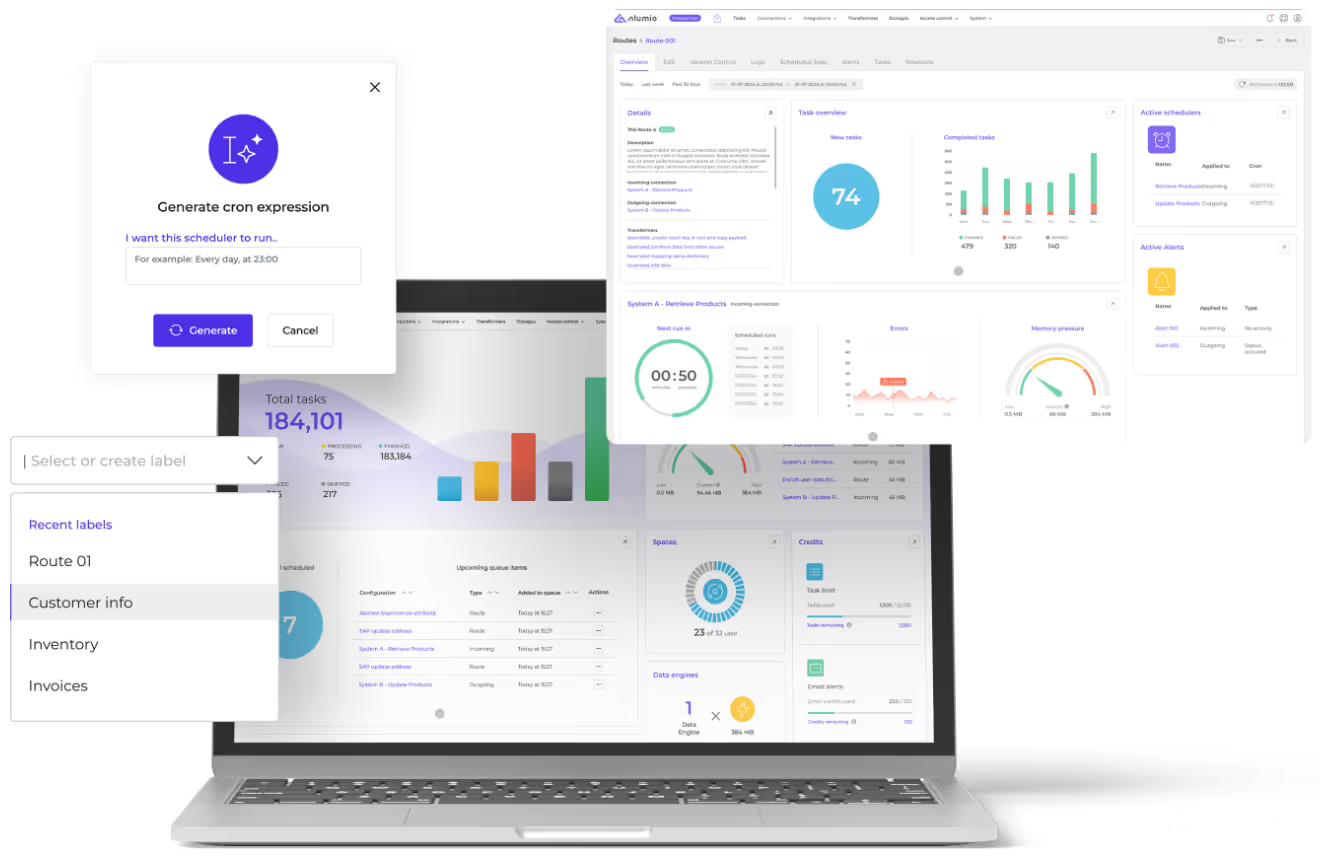
Platforms like the Alumio iPaaS offer versatile solutions that enable both data integration and application integration from one cloud-based, API-driven integration platform that ensures scalable connectivity, flexible data transformation, and real-time data exchange. Businesses must carefully evaluate their needs and objectives to choose the right approach to achieve seamless and effective data and application integrations that drive growth and innovation.





.svg)
.svg)
.svg)
.svg)
.svg)
.svg)
