A Alumio vivid purple arrow pointing to the right, a visual representation of how to access more page material when clicking on it.
Go back

What is Enterprise Application Integration?

By
Carla Hetherington
Published on
March 26, 2025
Updated on
June 24, 2026
IN CONVERSATION WITH
Email icon
Email icon

When it comes to enterprise IT landscapes, seamless connectivity between systems is no longer a luxury; it's a necessity. Enterprises today rely on a myriad of applications, from ERPs and CRMs to e-commerce platforms and customer service tools. But when these systems operate in silos, organizations face inefficiencies, data fragmentation, and missed opportunities. Enter Enterprise Application Integration (EAI). In this blog, we’ll dive into what EAI is, why it’s essential for modern enterprises, the most commonly integrated applications, the challenges you may face along the way, and most importantly, how Alumio solves those challenges as the secure, scalable, enterprise-ready iPaaS designed for the future of integration.

What is Enterprise Application Integration (EAI)?

Enterprise Application Integration is the process of connecting disparate enterprise systems and applications, enabling them to work together in a cohesive ecosystem. It ensures that data can move smoothly between platforms and departments, creating a unified infrastructure where business processes flow without interruption.

Rather than replacing legacy systems or implementing a one-size-fits-all solution, EAI creates a bridge between existing applications, allowing them to communicate in real time. Whether it's syncing customer data from a CRM to an ERP or integrating order information from an e-commerce platform into logistics software, EAI empowers businesses to be more agile, responsive, and efficient.

Why EAI is vital for modern enterprises

The modern enterprise ecosystem is complex. With digital transformation accelerating, companies are adopting more tools to stay competitive. However, more tools often mean more complexity. Here's why EAI is critical:

  • Improved operational efficiency: Integration reduces manual tasks, data duplication, and errors.
  • Enhanced data visibility: Unified data enables better analytics, reporting, and decision-making.
  • Faster time-to-market: Integrated systems streamline workflows and product rollouts.
  • Agility and scalability: Enterprises can adapt quickly to market demands and scale operations with minimal disruption.
  • Customer experience: Seamless data exchange ensures consistent and personalized customer journeys.

Popular applications enterprises integrate

Some of the most common applications enterprises need to integrate include:

Challenges of Enterprise Application Integration

Despite its benefits, EAI can be complex. Many enterprises face the following challenges:

  • Legacy systems: Older software often lacks modern APIs, making integration difficult.
  • Data inconsistencies: Different systems may use different formats, requiring transformation and mapping.
  • Security and compliance: Data transfer must comply with strict regulations like GDPR and HIPAA.
  • High costs and time-consuming setups: Traditional integration methods can be resource-intensive.
  • Lack of real-time capabilities: Batch-based integration delays data flow and reduces responsiveness.

This is where choosing the right middleware becomes essential, and why more enterprises are turning to Alumio.

Turn AI ambition into action

Portrait of Leonie Becher Merli, Business Development Manager at Alumio

Get a free assessment of your integration needs and next steps

Portrait of Leonie Becher Merli, Business Development Manager at Alumio

Why Alumio is the right middleware for Enterprise Application Integration

Alumio is an enterprise-ready Integration Platform as a Service (iPaaS) designed to solve the complexities of EAI with elegance, speed, and security. Here's what makes Alumio the right choice for enterprises looking to build a future-proof integration strategy:

1. Connect anything to anything

Alumio provides pre-built connectors and a flexible integration engine that makes it easy to connect all types of enterprise applications, from legacy on-premise software to modern cloud-based SaaS platforms.

2. Enterprise-grade security and compliance

Security isn't just a feature at Alumio; it's a foundation. Our platform is ISO 27001-certified and offers:

  • Automated monitoring and logging
  • Advanced access control, Single Sign-On (SSO), and Multi-Factor Authentication (MFA)
  • End-to-end data encryption and full compliance with global privacy regulations
  • Built-in reactivation procedures and proactive security updates
  • Secure VPN tunnels and AWS-backed infrastructure

With Alumio, enterprises can trust that their integrations are built and maintained at the highest level of security. Learn more about our security features →

3. Built for scalability and resilience

Alumio is built to grow with your business. Whether you're handling hundreds or millions of transactions per day, our platform can scale horizontally to meet your demands without sacrificing performance or uptime.

4. Real-time integrations

Our event-driven architecture enables real-time data syncing across systems, keeping every department aligned and reactive. Say goodbye to delays and hello to immediacy.

5. Low-code interface

Empower IT teams and business users alike with Alumio’s intuitive, visual interface. Create, manage, and monitor integrations without writing a single line of code.

6. Monitoring, alerts, and self-healing

Alumio's platform includes built-in monitoring, intelligent alerts, and reactivation features that automatically respond to issues, reducing downtime and support costs.

The bottom line: Why Alumio is the smarter choice

In an era where connectivity is king, enterprise application integration isn't optional; it's strategic. The success of your digital transformation efforts depends on how well your systems talk to each other. Alumio empowers enterprises to integrate confidently, securely, and efficiently. With robust capabilities, cutting-edge security, and a platform built for enterprise scale, Alumio is more than middleware. It’s your integration partner for the future. Whether you're modernizing legacy systems, expanding your digital ecosystem, or simply trying to stay ahead of the competition, Alumio ensures you're always connected, always compliant, and always in control.

Start your EAI journey with Alumio today →

No items found.
Topics in this blog:

FAQ

Integration Platform-ipaas-slider-right
What is Enterprise Application Integration (EAI) and why is it important?

Enterprise Application Integration (EAI) is the discipline of connecting an organization's diverse enterprise applications (ERP, CRM, e-commerce, WMS, HR systems, BI platforms) so they can exchange data and trigger each other's processes in a coordinated way. It is important because enterprises run many applications that each hold part of the business's operational data, and without integration, these systems create data silos, require manual handoffs between processes, and prevent the automation and real-time visibility that digital competitiveness requires. EAI provides the technical and governance framework for turning a portfolio of business applications into a coherent, automated operation.

Integration Platform-ipaas-slider-right
How does EAI differ from simple point-to-point system connections?

EAI differs from point-to-point connections by providing a managed, governed approach to enterprise connectivity rather than individual, isolated connections. Point-to-point connects each system pair directly through custom code; EAI uses a central integration platform (bus or backbone) through which all systems communicate, with shared transformation, routing, monitoring, and governance standards applied consistently. The practical difference is scale and governance: EAI manages 20 systems connected through one platform with consistent standards; point-to-point manages 20 systems through up to 190 separate custom connections with no shared governance. As enterprise application counts grow, EAI governance is what keeps the landscape manageable.

Integration Platform-ipaas-slider-right
What are the main patterns used in Enterprise Application Integration?

The main EAI patterns are: hub-and-spoke (a central integration platform routes all data flows between systems, with each system connecting once to the hub), publish-subscribe (systems publish events to a central bus and subscribing systems receive the events they are interested in), request-reply (one system requests data from another and waits for the response), and transformation and routing (the integration layer applies data format conversion and conditional routing before data reaches its destination). Modern iPaaS platforms like Alumio implement all of these patterns through their Route architecture, supporting the full range of EAI patterns from a single governed platform.

Integration Platform-ipaas-slider-right
How does Alumio serve as an Enterprise Application Integration platform?

Alumio serves as an EAI platform through its governed integration backbone: the hub-and-spoke architecture (each enterprise application connects once to Alumio, with Routes governing all data flows), config-first Transformer components (implementing the transformation and routing patterns that EAI requires), event-driven and scheduled Route triggers (supporting both publish-subscribe and batch EAI patterns), and central monitoring with audit logging (providing the governance visibility that enterprise EAI demands). The platform's prebuilt connectors for enterprise applications (SAP, Dynamics 365, Salesforce, Akeneo, Shopify) reduce the EAI implementation effort for the most common enterprise application combinations.

Integration Platform-ipaas-slider-right
What are the most common EAI challenges enterprises face?

Common EAI challenges are: data model heterogeneity (each enterprise application represents business entities differently, requiring transformation logic to normalize), legacy system integration (older ERP and CRM systems use protocols like SOAP, file-based exchanges, or proprietary interfaces that modern integration platforms must bridge), organizational ownership gaps (no single team owns the full integration landscape, leading to fragmented governance), change management when any connected application updates (each update may require integration connector updates), and monitoring gaps (without centralized visibility, integration failures are discovered reactively). Each of these is addressed by the architecture and governance features of a mature EAI platform.

Integration Platform-ipaas-slider-right
How has cloud adoption changed the EAI landscape?

Cloud adoption has transformed EAI by: shifting enterprise applications from on-premise to SaaS (requiring integration platforms that connect cloud applications via REST APIs rather than on-premise protocols), enabling cloud-native iPaaS platforms that do not require on-premise infrastructure (reducing EAI implementation cost and complexity), increasing the number of applications enterprises run (as SaaS adoption accelerates, the integration surface grows), and creating hybrid landscapes where on-premise legacy systems coexist with cloud SaaS applications (requiring integration platforms that bridge both generations). Modern EAI platforms like Alumio are designed for this hybrid reality, supporting legacy on-premise protocols alongside modern cloud APIs from the same platform.

Get a free assessment of your integration needs

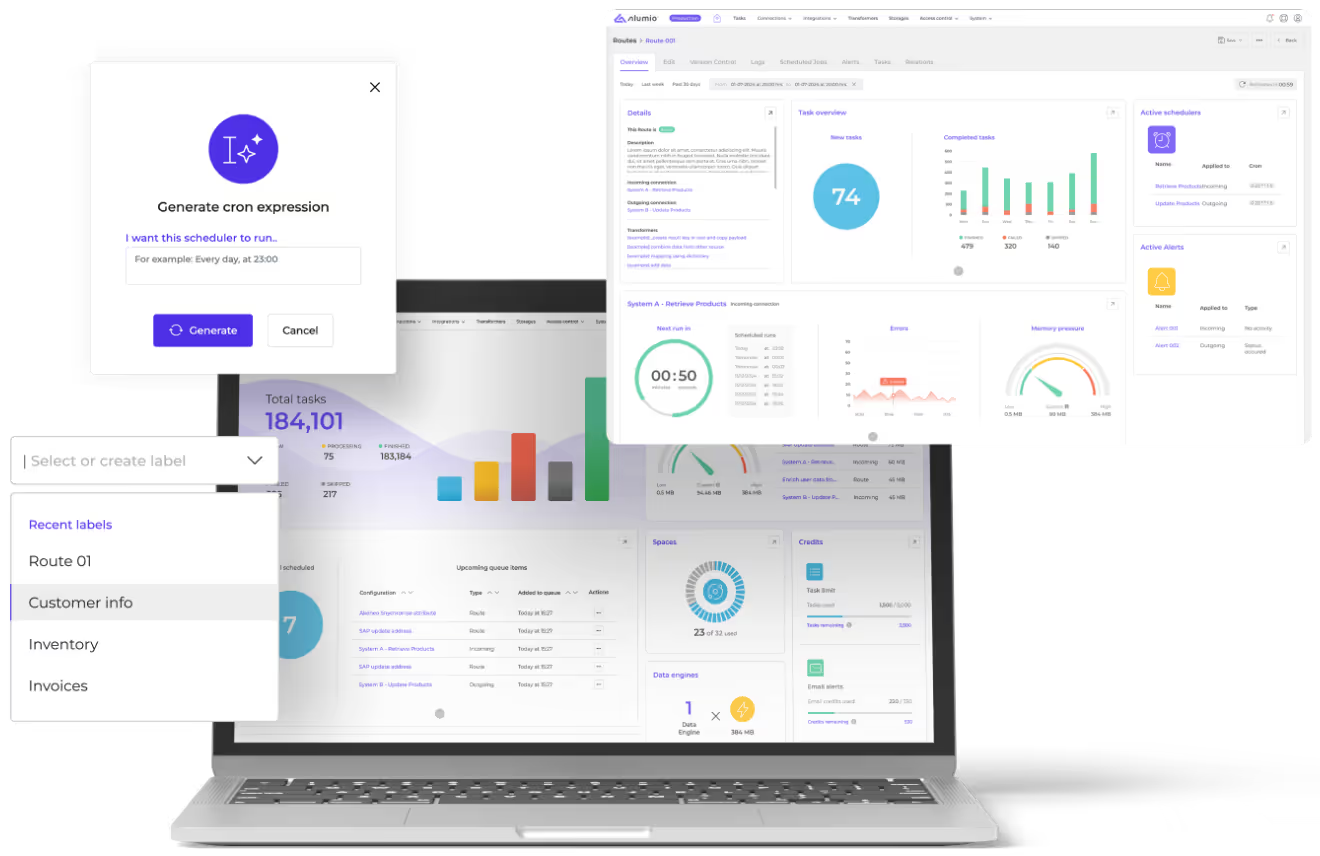
Laptop screen displaying the Alumio iPaaS dashboard, alongside pop-up windows for generating cron expressions, selecting labels and route overview.