Rethinking iPaaS: more than customer-facing flows
The real untapped potential often sits inside a company’s own walls. Internal workflows, across HR, Finance, IT, and Operations, are often fragmented, inefficient, and invisible. When data has to travel between Jira, planning tools, CRMs, accounting software, and internal portals, teams end up copy-pasting, exporting CSV files, or relying on brittle workarounds. It works, until it doesn’t.
This is where iPaaS has been hiding in plain sight: not just as an external connector, but as the orchestration layer that makes internal processes faster, more reliable, and easier to manage.
The hidden cost of siloed operations
Most growing companies don’t suffer from a lack of tools, they suffer from too many disconnected ones. HR tracks employees in one system, Finance uses another for payroll and invoicing, developers manage work in Jira, and account managers rely on CRMs like HubSpot. Each team works fine in isolation, but the moment cross-department collaboration is needed, cracks begin to show.
Tickets get lost in translation, developers chase down customer phone numbers that already exist in CRM, and account managers wait for updates buried in another system. Hours disappear into status checks and manual handoffs. The problem isn’t the tools, it’s the lack of integration. And while spreadsheets, exports, or one-off scripts might fill the gap temporarily, they quickly become fragile bottlenecks.
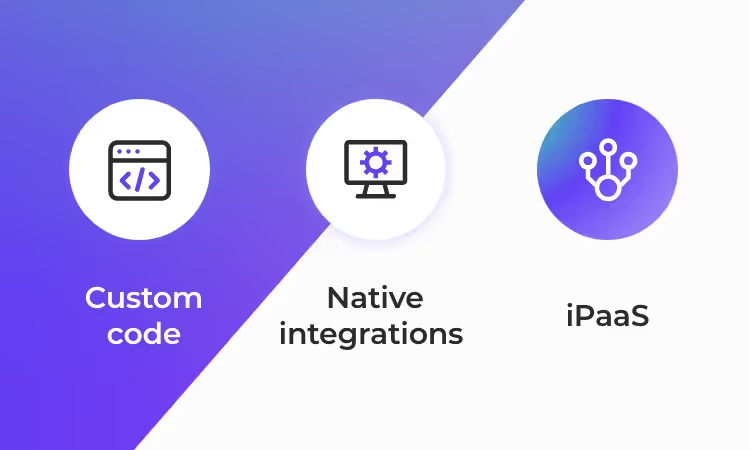
Why native integrations fall short
It’s tempting to assume that “native” integrations offered by most SaaS vendors will solve these problems. To a point, they do. Syncing contacts from one system to another or pushing basic updates is easy enough. But as soon as workflows get more complex, such as triggering conditional actions across multiple platforms or handling enriched data, native integrations start to show their limits.
They can’t handle advanced logic, they don’t centralize error monitoring, and they tend to break silently when something changes upstream, like a renamed field in a CRM. What’s more, they scatter integration logic across dozens of tools, leaving IT and business leaders with no single view of what’s really happening. The result is a patchwork of connections that are fast to set up but costly to maintain.
The case for an iPaaS inside your organization
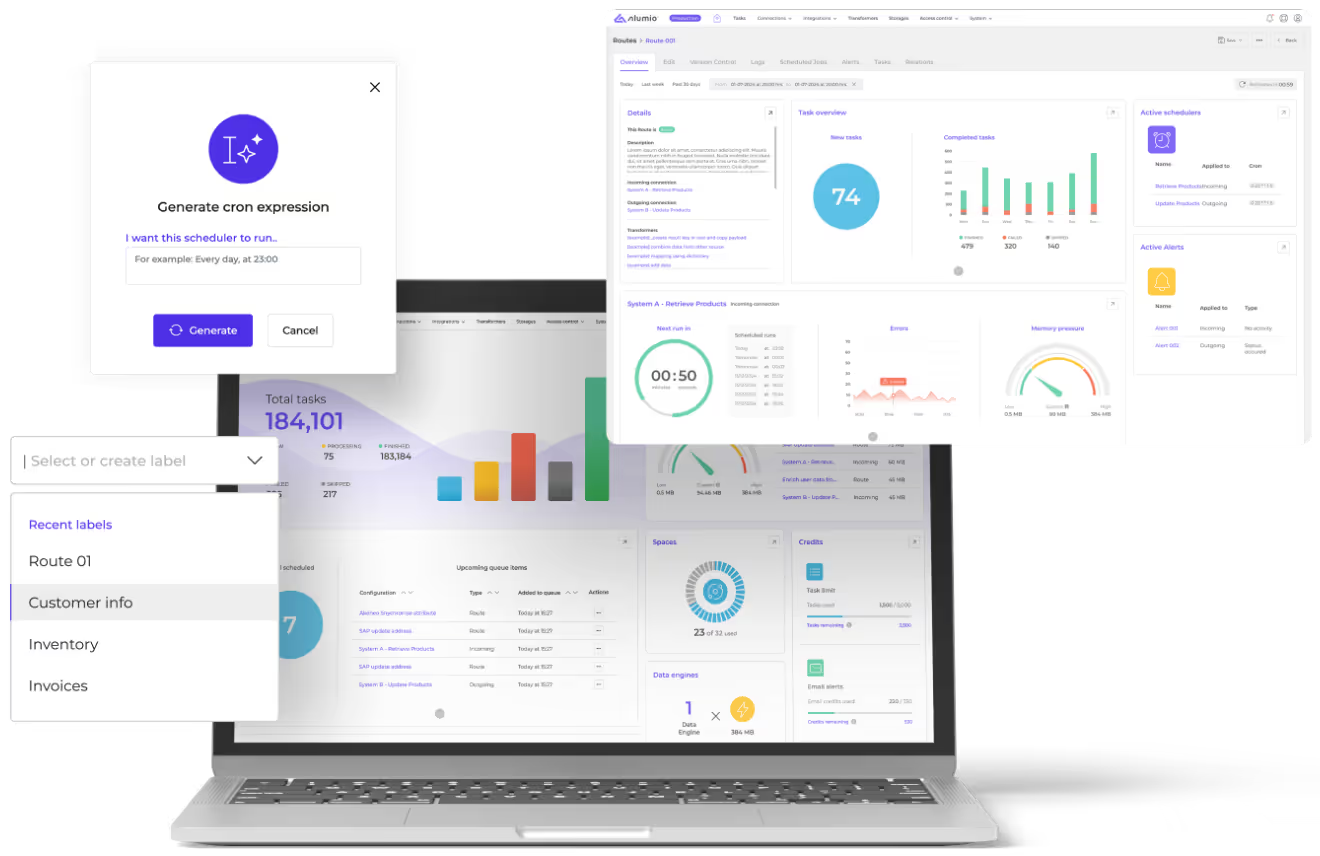
An iPaaS solves these challenges by acting as a central nervous system for your internal operations. Instead of relying on scattered links, it becomes a single orchestration layer where all workflows can be monitored, governed, and adapted as business needs evolve.
At Memo, Johan shared how connecting Jira to Simplicate with Alumio gave their developers and planners a single source of truth. Developers no longer had to guess which tickets to prioritize, planners had a clear overview of workload, and utilization improved without adding extra hours. Extending this to HubSpot meant account managers could see ticket statuses instantly, saving countless back-and-forth conversations.
These kinds of connections don’t just reduce manual work; they create resilience. Leaders gain visibility into processes that were previously hidden. Finance can spot trends in real time, customer success teams can anticipate issues earlier, and executives can make strategic decisions based on live dashboards instead of stale reports.
When does iPaaS make sense for internal ops?
Not every company needs an iPaaS. Very small businesses running on a single vendor suite like Google Workspace or Microsoft 365 may find native features sufficient. Similarly, if you only need a one-off data migration, the investment might be overkill.
But the moment workflows cross multiple departments, compliance or governance become priorities, or systems change frequently, an iPaaS is no longer a luxury, it’s a strategic necessity. It keeps your processes adaptable, your data auditable, and your operations scalable.
From integration to intelligence
The real promise of internal integration goes beyond efficiency. As Caspar explained, once data flows reliably across systems, the next frontier is accessibility. Emerging technologies like Model Context Protocol (MCP) will allow leaders to query integrated data directly in natural language. Instead of digging through BI dashboards, a manager could simply ask, “How many high-priority tickets were open last week?” or “Which customers had the most overdue invoices?” and get a secure, instant answer.
This shift turns integration from “plumbing” into intelligence. It gives every decision-maker, not just IT or analysts, the power to work with live, accurate data.
Why internal integration is the real digital transformation
It’s easy to focus integration efforts on customer-facing flows because the ROI feels more direct. But the truth is, external experiences are only as strong as the internal processes behind them. A webshop order is useless if fulfillment lags because Finance and Operations aren’t aligned. Customer support suffers when Success can’t see live product or billing data. Growth slows when manual bottlenecks eat up time.
The invisible upgrade is recognizing that digital transformation isn’t about adding more tools, it’s about making the ones you already have work together. iPaaS provides that glue. By orchestrating internal workflows, it builds agility, transparency, and resilience into the foundation of your business.
And while customers may never see it, they’ll feel it, in faster service, fewer mistakes, and a smoother overall experience. Want to learn more about the value of an iPaaS for internal operations? Check out this Alumio Talks Episode.




.svg)








.svg)
.svg)
.svg)
.svg)
.svg)
.svg)
