




.svg)



Comparing Claude vs. ChatGPT for e-commerce automation
When exploring which AI is better for e-commerce businesses, Claude or ChatGPT, it’s key to remember that there’s no specific best AI for e-commerce. There’s no one-size-fits-all solution when integrating AI assistants into your e-commerce stack, and the optimal choice depends on each business’s unique workflows, priorities, and compliance requirements.
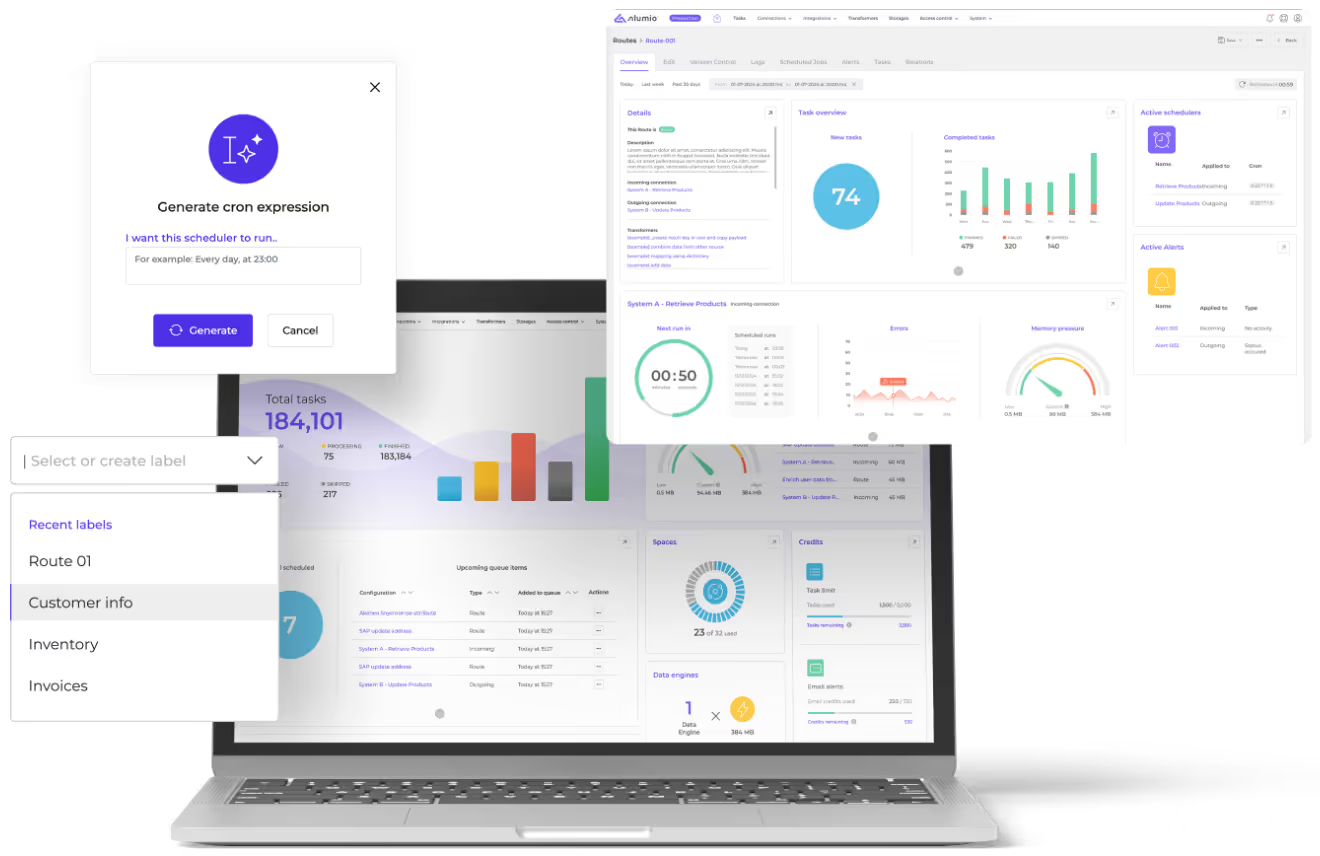
In fact, if you’re using next-gen, API-first middleware solutions like the iPaaS (integration Platform as a Service), you can even take the hybrid approach and integrate both Claude and ChatGPT into your e-commerce ecosystem to leverage each tool where it shines. While we later explore how iPaaS solutions like Alumio help build best-of-breed integrations with either or both solutions as e-commerce AI tools, let’s first dive into the key differences in this Claude vs. ChatGPT comparison from an e-commerce perspective.
Claude vs. ChatGPT comparison: Basic capabilities
When it comes to AI automation for online stores, Claude and ChatGPT are easily among the topmost considerations. Both can be turned into advanced e-commerce AI tools, but their strengths align with different e-commerce priorities:
ChatGPT as an e-commerce AI tool
Developed by OpenAI, ChatGPT has quickly become a favorite for AI content generation for e-commerce, powering everything from high-volume product descriptions to engaging email campaigns and SEO-rich category pages. Its creative, conversational style helps brands keep their content pipeline full of engaging content, while its robust ecosystem makes it easy to integrate with popular e-commerce platforms and marketing tools.
ChatGPT’s basic offering that enables AI automation for online stores can be classified as:
- Strengths: Broad capabilities, creativity, third‑party integrations
- Model: GPT‑4 / GPT‑4‑turbo
- Context window: Up to 128K tokens (in Turbo) for long conversations and documents
- Ecosystem:
- Rich plugin marketplace (Shopify, Salesforce, Zapier, etc.)
- GPT Store for prebuilt, customizable assistants
- Microsoft 365 and Azure integrations
- Customization:
- Fine‑tuning available for brand‑specific voice
- Custom GPT builder for industry‑specific workflows
- Use style: Creative, conversational, ideal for brainstorming and customer engagement
- Typical e‑commerce fit: Generating SEO‑optimized product copy, dynamic on‑site chatbots, marketing campaigns
Claude as an e-commerce AI tool
Developed by Anthropic, Claude is designed for reliability and precision, making it a powerful choice for product data enrichment AI and structured content tasks. Claude AI use cases for retailers include automating bulk product tagging, ensuring data consistency across catalogs, and generating rule-based content that matches brand guidelines. Its analytical approach and advanced context handling make it ideal for large-scale product data management and compliance-driven content.
Claude’s basic offering that enables AI automation for online stores can be classified as:
- Strengths: Safety, transparency, low hallucination rate, document summarization
- Model: Claude 3 (Opus for performance, Sonnet for balance, Haiku for cost efficiency)
- Context window: Up to 200K tokens, excels at parsing long spec sheets and manuals
- Ecosystem:
- API‑first design with enterprise‑grade security
- Growing library of connectors for PIM and ERP systems
- Customization & governance:
- Constitutional AI framework exposes reasoning steps
- Built‑in guardrails for compliance (GDPR, HIPAA‑adjacent workflows)
- Use style: Analytical, cautious, well‑suited for rule‑based tasks
- Typical e‑commerce fit: Bulk product data enrichment, returns, and compliance‑driven support, long‑form document processing
ChatGPT vs. Claude: comparing key e-commerce use cases
When integrating AI assistants into your e-commerce stack, it is important to note that every workflow comes with its set of demands and risk profiles. By matching each AI’s core philosophy and strengths to real‑world tasks, you can determine the pros and cons of applying Claude vs. ChatGPT for product descriptions and chatbots, product enrichments, personalization, and more. Let's explore the advantages of each AI solution, depending on different uses cases:
1. Product content creation (titles, descriptions, SEO)
- ChatGPT: Excels at generating high-volume, creative product descriptions and brainstorming new angles for SEO-rich content. Its conversational style is a boon for creating engaging copy.
- Claude: Delivers more consistent, structured writing that’s perfect for long-form product pages, technical specs, or when you need to match a specific brand tone across thousands of SKUs.
Verdict: When it comes to AI content generation for e-commerce, you can use ChatGPT for creative brainstorming and Claude for structured, rules-based product copy. Both are top-tier e-commerce AI tools for content generation, but each works better than the other depending on workflows.
2. Customer service automation (chatbots, email responses)
- Claude: Known for its cautious, accurate tone, reducing the risk of hallucinations, or overpromising, which is crucial for high-stakes support environments.
- ChatGPT: More engaging and conversational, making it ideal for retail brands that prioritize customer engagement and upselling.
Verdict: When it comes to AI customer service chatbot comparison, Claude is safer for compliance and sensitive support; ChatGPT is better for high-engagement, sales-driven chatbots.
3. Product data enrichment (tagging, categorization, attributes)
- Claude: Superior at parsing structured data, following rules, and maintaining consistency across large datasets—key for product data enrichment AI tasks.
- ChatGPT: Effective, but often requires more precise prompting to avoid inconsistencies.
Verdict: Claude is the preferred choice for back-office automation and structured enrichment.
4. Personalization and recommendations
- ChatGPT: Better at dynamic, on-the-fly personalization thanks to its conversational context retention.
- Claude: Excels when prompts are well-scoped and segmentation is required, but less flexible for real-time personalization.
Verdict: ChatGPT leads in AI personalization for front-end experiences; Claude is strong for content segmentation.
In summary, ChatGPT’s conversational abilities shine in high-engagement support scenarios, while Claude’s cautious, context-aware responses help reduce errors and maintain trust in sensitive interactions. As such, when used as e-commerce AI tools, both models are transforming how retailers deliver instant, personalized support — boosting satisfaction and helping drive conversions.






.svg)
.svg)
.svg)
.svg)
.svg)
.svg)
