





.svg)


How have customer expectations evolved in manufacturing?
Today’s B2B customers expect the same level of convenience, speed, and personalization they’re used to in B2C e-commerce. They want self-service portals, real-time inventory updates, personalized recommendations, and seamless ordering processes at their fingertips.
For manufacturers, this means providing robust digital solutions that simplify the buying journey while delivering value-added features like custom pricing, detailed product specifications, and technical support. We’ve worked with clients who initially underestimated how these expectations shape buying decisions. Still, as we often remind them, it is not just about selling products; it’s about creating an experience that builds trust and long-term relationships and keeps customers coming back. This is where an iPaaS comes in.
What role does the iPaaS play in tackling common manufacturing challenges?
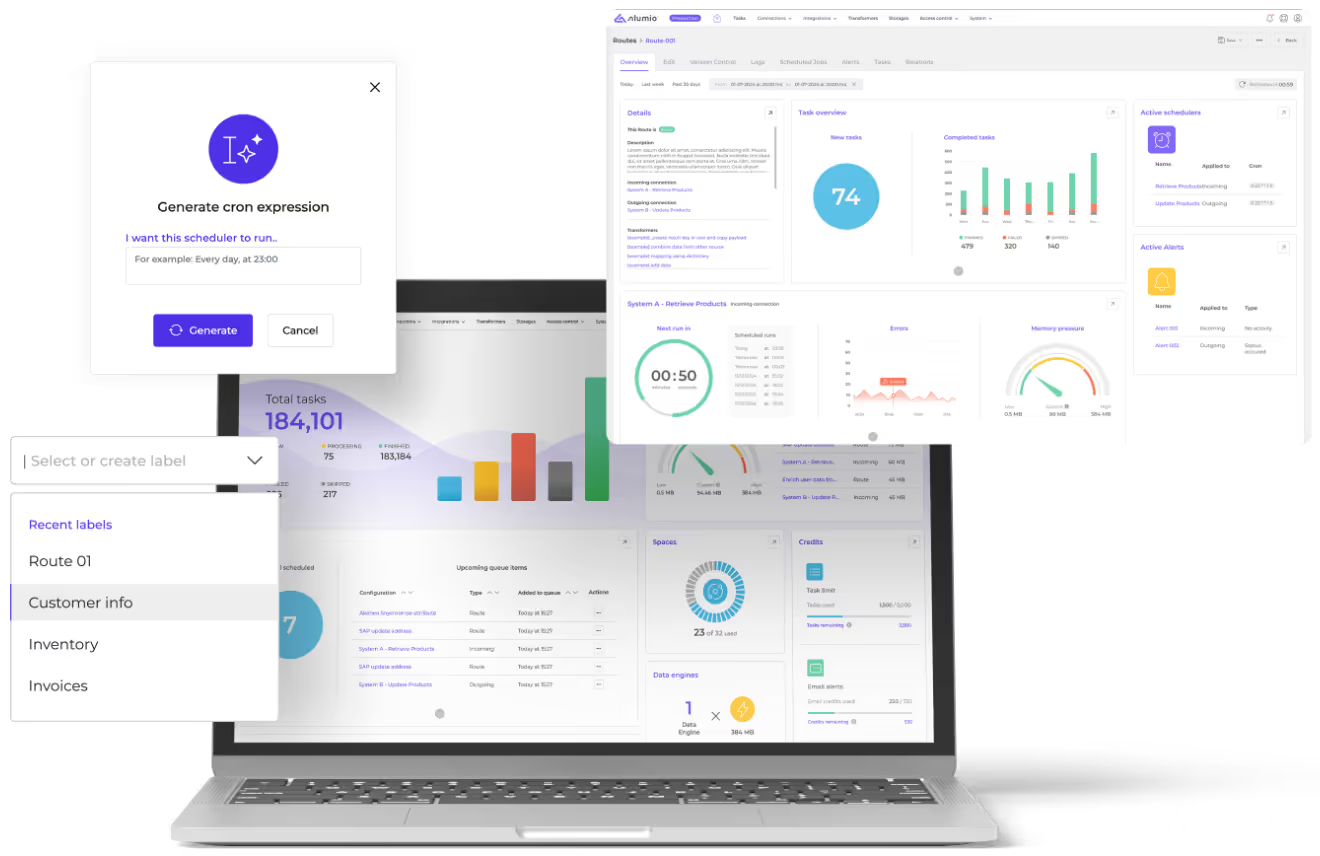
An iPaaS like Alumio is a game-changer for manufacturers. It transforms how manufacturers handle their digital ecosystem and simplifies integrating multiple systems, providing a centralized hub for data flow and monitoring.
One feature we really appreciate from the Alumio platform is the error detection and logging capabilities. In our experience, manufacturers often struggle with downtime due to integration issues, and Alumio can help catch problems early, allowing them to be resolved before they cause major disruptions. Plus, by reducing the need for custom code, it saves our clients a ton of time and resources while setting them up for future growth. It’s all about making things simpler and more efficient, which is exactly what manufacturers need nowadays.
Is an iPaaS essential for manufacturers building integrated digital landscapes, or are there cases where it might not be the best fit?
An iPaaS is essential for most manufacturers looking to build integrated digital landscapes, especially those with complex workflows and multiple systems to connect. From our experience, it’s invaluable in creating seamless integrations that allow data to flow smoothly between platforms. For businesses that rely on different systems, whether ERP, PIM, or CRM, an iPaaS helps centralize everything and makes managing that ecosystem far more efficient.
That said, if you’re a smaller manufacturer with relatively simple needs, a point-to-point integration might be enough. But, as we've seen with many of our clients, even smaller companies quickly outgrow simple integrations as their business expands. That’s where an iPaaS shines; it provides the flexibility and scalability that help businesses future-proof their digital landscape. It’s an investment that pays off as businesses grow and evolve.
What trends will define the manufacturing sector in the next five years?
When we think about the future of manufacturing, a few key trends stand out based on what we’ve seen with our clients. AI and automation are definitely at the forefront. From predictive maintenance that prevents costly downtime to personalized recommendations that elevate the customer experience, we know these technologies are becoming indispensable for manufacturers aiming to stay competitive.
Transparency is also becoming a cornerstone of modern manufacturing. Customers no longer want to be left in the dark after placing an order; they now expect real-time updates on everything from production to shipping. For example, one of our clients has implemented a system that provides live insights during production. As their products are being manufactured, measurements are taken, and customers can access these results even before the product is shipped. This kind of openness builds trust and fosters stronger relationships, setting a new standard in B2B manufacturing.
What’s exciting is how this drive for transparency is closely tied to the rise of AI. Over the next five years, we expect AI-powered data analysis to help manufacturers optimize their operations and elevate the customer experience even further. However, there’s a critical challenge here: Without updating outdated technology stacks, manufacturers won’t be able to fully harness AI's potential. It’s not just about adopting AI. For many, it starts with replacing outdated systems and embracing scalable, future-ready solutions.
Another rising trend is the need for data integration, which, thanks to solutions like the Alumio iPaaS, is also transforming the industry. With seamless integrations becoming the norm, manufacturers now have better access to valuable insights that enable smarter, faster decision-making. We’ve witnessed firsthand how it drives more agile operations for our clients.
Additionally, the adoption of composable commerce will only continue to grow. Many of the manufacturers we work with are moving away from rigid, monolithic systems and embracing more modular, best-of-breed architectures. This approach offers the flexibility and scalability they need to adapt to evolving market demands, and we’ve seen how it empowers them to respond faster to changes.
Finally, sustainability is a growing priority. There’s mounting pressure for manufacturers to adopt greener practices, and digital tools are essential for tracking and optimizing environmental impact. Many of our clients are already exploring how they can use technology to not only reduce their footprint but also position themselves as leaders in sustainable manufacturing.
Could you share a success story where Miller Digital helped a manufacturing client solve a complex technical challenge?
One of our standout projects was with Velopa, an urban furniture manufacturer. They faced the challenge of managing product information across different systems and wanted to improve the online customer experience. As such, they needed a solution to streamline their processes and provide real-time updates on product availability and pricing, giving their customers the transparency they were increasingly expecting.
We worked closely with them to design a custom integration between their ERP and e-commerce platform. This allowed them to eliminate the silos and ensure that everything from product details to pricing was updated in real-time and synchronized across their systems.
This not only improved their internal operational efficiency but also provided their customers with the transparency and convenience they demanded. The results were significant: increased customer satisfaction, higher conversion rates, and a stronger competitive position in the market. This case is a perfect example of how powerful integrations can be in helping manufacturers stay ahead in today’s digital world.
What makes Miller Digital’s approach to solving clients' digital challenges unique?
Our approach is all about collaboration and pragmatism. We don’t believe in one-size-fits-all solutions. Instead, we work closely with our clients to understand their specific needs, challenges, and goals before building tailored solutions. In line with this, we are also deeply committed to transparency. From the initial discovery phase to post-launch support, we keep our clients informed and involved every step of the way so they’re never left wondering what’s going on.
Additionally, scalability is built into every project we undertake. We use modern technologies and composable architectures to ensure that as our clients grow, their digital systems can scale with them, whether handling more transactions, expanding product catalogs, or adjusting to new market demands. We know that a flexible system is key to long-term success.
Finally, our technical expertise sets us apart. We love a challenge, and as such, we specialize in tackling complex integration projects, ensuring that all components of a client’s digital ecosystem work seamlessly together.
What advice would you give to manufacturers looking to embark on their digital transformation journey?
If you're a manufacturer looking to start your digital transformation journey, our advice is to begin with a clear vision. Start by defining your goals and priorities. What do you want to achieve with digital transformation? Whether improving customer experiences, increasing efficiency, or scaling operations, having a clear vision will guide your efforts. In our opinion, customer experience should be the top priority. Ensure your platform is intuitive, fast, and reliable, with features that cater specifically to your customers' needs.
Then, focus on building a solid foundation. This means investing in flexible, scalable solutions that can grow with your business. Don't overlook the power of data; clean, integrated data is the backbone of any successful digital ecosystem. We’ve seen it firsthand: When data flows seamlessly across systems, everything else works more efficiently.
However, before diving into digital transformation, it is a good idea to look around and see what others in your industry are doing. Gathering insights from those who have already gone through the process can help you avoid common pitfalls and guide you toward the most effective solutions for your business. You can also inform yourself by researching, attending industry events, and staying updated on the latest trends and best practices.
Last but not least, don't hesitate to reach out to experts like ourselves for advice; we are always happy to help. And remember, digital transformation is a journey, not a sprint; take it one step at a time!




.svg)
.svg)
.svg)
.svg)
.svg)
.svg)
