

Vill du lära dig hur Alumio möjliggör tillverkningsintegration?

Ta reda på det här
A Alumio vivid purple arrow pointing to the right, a visual representation of how to access more page material when clicking on it.
Gå tillbaka

En guide till ERP-integration i tillverkning

Av
Saad Merchant
Publicerad den
February 27, 2026
Uppdaterad den
March 2, 2026
I SAMTAL MED
Email icon
Email icon

Enterprise Resource Planning (ERP) -systemet är den operativa kärnan i alla moderna tillverkningsföretag. Det hanterar allt från ekonomi och upphandling till lager- och leveranskedjelogistik. Men den verkliga kraften i ett ERP låses bara upp när det är sömlöst integrerat med de andra kritiska systemen som driver produktion, uppfyllande och kundrelationer. Utan denna anslutning står tillverkare inför datasilos, operativ ineffektivitet och en oförmåga att reagera på marknadsförändringar med smidighet. Den här guiden beskriver vikten av ERP-integration i tillverkningen. Den beskriver de vanliga utmaningar som organisationer står inför, från äldre system till punkt-till-punkt-komplexitet, och presenterar ett strukturerat tillvägagångssätt för att bygga ett anslutet, framtidssäkert IT-landskap med hjälp av en integrationsplattform som en tjänst (iPaaS).

The critical role of ERP integration

ERP integration is the process of creating a unified data flow between your ERP and other software applications, such as a Manufacturing Execution System (MES), Warehouse Management System (WMS), or Customer Relationship Management (CRM) tool. A successful integration strategy eliminates manual data entry, provides a single source of truth, and creates a transparent view of the entire business.

In a manufacturing environment, data must flow freely between the top floor (business planning) and the shop floor (production). ERP integration makes this possible, enabling a series of operational benefits that are essential for competitive advantage.

  • Unified operational view: Integrating your ERP with your MES provides real-time visibility into production status. This allows you to track orders, monitor machine performance, and manage resource allocation based on accurate, up-to-the-minute information.
  • Optimized inventory management: By connecting the ERP to the WMS, you can automate inventory tracking. Material consumption on the factory floor is instantly reflected in ERP inventory levels, preventing stockouts, reducing carrying costs, and improving forecast accuracy.
  • Enhanced supply chain efficiency: An integrated ecosystem allows for the automated exchange of data with suppliers and logistics partners. Purchase orders, shipping notices, and invoices are processed without manual intervention, reducing lead times and minimizing errors.
  • Improved decision-making: When all systems are connected, leadership has access to a complete and accurate picture of business performance. This data-driven foundation enables better strategic decisions regarding production planning, resource investment, and market positioning.

Common challenges in manufacturing ERP integration

Despite the clear benefits, achieving successful ERP integration is a complex undertaking. Manufacturers often encounter several significant obstacles that can derail projects and inhibit growth.

  • Point-to-point complexity: The traditional approach to integration involves building custom, direct connections between each application. This creates a "spaghetti architecture" that is brittle, difficult to maintain, and expensive to scale. Every new application adds an exponential number of connections, leading to a fragile and unmanageable IT landscape.
  • Legacy system limitations: Many manufacturers rely on established, on-premise ERP systems that lack modern API capabilities. Connecting these legacy systems to cloud-based applications often requires specialized expertise and complex workarounds that increase technical debt.
  • Data consistency and governance: Each system has its own unique data format. Manually mapping and transforming data between an ERP, MES, and WMS is a time-consuming process that is highly prone to errors. Without a centralized data governance model, inconsistencies can corrupt reporting and lead to poor business decisions.
  • Lack of internal expertise: Building and maintaining custom integrations requires a dedicated team of developers with specialized skills. Many organizations lack these internal resources, leading to a dependency on expensive third-party consultants and prolonged project timelines.


Förvandla AI-ambition till handling

Portrait of Leonie Becher Merli, Business Development Manager at Alumio

Få en kostnadsfri bedömning av dina integrationsbehov

Portrait of Leonie Becher Merli, Business Development Manager at Alumio

The iPaaS solution: A modern approach to integration

To overcome these challenges, manufacturers are turning to an integration Platform as a Service (iPaaS). An iPaaS like Alumio provides a centralized, low-code platform for building, managing, and monitoring all integrations from a single interface. It decouples your systems, creating a flexible and scalable architecture.

Instead of connecting your applications directly to one another, you connect each system to the Alumio iPaaS. The platform then acts as the central hub, orchestrating the flow of data between all connected endpoints. This hub-and-spoke model provides a structured and maintainable solution.

Key benefits of using an iPaaS for ERP integration include:

  • Pre-built connectors: Alumio offers a library of pre-built connectors for major ERPs (like SAP and Microsoft Dynamics) and other manufacturing systems. This drastically reduces development time and eliminates the need for custom coding.
  • Automated data transformation: The platform includes a graphical interface for mapping and transforming data between different formats. This ensures that information flows cleanly and consistently across all systems without manual intervention.
  • Centralized monitoring and error handling: An iPaaS provides a single dashboard to monitor the health of all integrations. It offers real-time alerts and detailed logging, allowing you to identify and resolve issues before they impact business operations.

By implementing a modern integration strategy, you create a digital backbone that supports your organization's growth and innovation.

Inga objekt hittades.

FAQ

Integration Platform-ipaas-slider-right
Vad är skillnaden mellan ERP-integration och ERP-implementering?
  • ERP implementation is the process of installing and configuring the ERP software itself. ERP integration is the subsequent process of connecting that ERP system to other software applications (like MES, WMS, and CRM) to enable automated data exchange across the organization.
  • Integration Platform-ipaas-slider-right
    Kan en iPaaS ansluta ett molnbaserat ERP-system med lokala tillverkningssystem?
  • Yes. A key strength of an iPaaS like Alumio is its ability to facilitate hybrid integration. It can seamlessly connect cloud-based applications with legacy, on-premise systems, allowing you to modernize your IT landscape without a complete overhaul.
  • Integration Platform-ipaas-slider-right
    Hur förbättrar ERP-integration synligheten i leveranskedjan?
  • By integrating your ERP with supplier portals (via EDI or API) and logistics platforms (TMS), you can automate the flow of information. This provides real-time updates on order status, shipments, and inventory levels across the entire supply chain, reducing delays and improving planning.
  • Integration Platform-ipaas-slider-right
    Varför är punkt-till-punkt-integrationer inte lämpliga för modern tillverkning?
  • Point-to-point integrations create a rigid and complex web of connections that is difficult to manage and scale. Every change or new application requires significant development effort, hindering agility. Our article on why centralized integration is the key to business growth explores this topic further.
  • Integration Platform-ipaas-slider-right
    Hur säkerställer Alumio att data är enhetliga mellan ERP och MES?
  • Alumio's data transformation engine allows you to define rules that automatically standardize data as it moves between systems. This ensures that production orders, material codes, and inventory counts are consistent across both the ERP and MES, creating a single source of truth.
  • Integration Platform-ipaas-slider-right
    Vad är det första steget för att starta ett ERP-integrationsprojekt?
  • The first step is to map out your existing business processes and identify all the data flows between your systems. This analysis helps you prioritize which integrations are most critical for your operations. For a deeper dive, review our comprehensive solutions for manufacturing.
  • Få en kostnadsfri bedömning av dina integrationsbehov

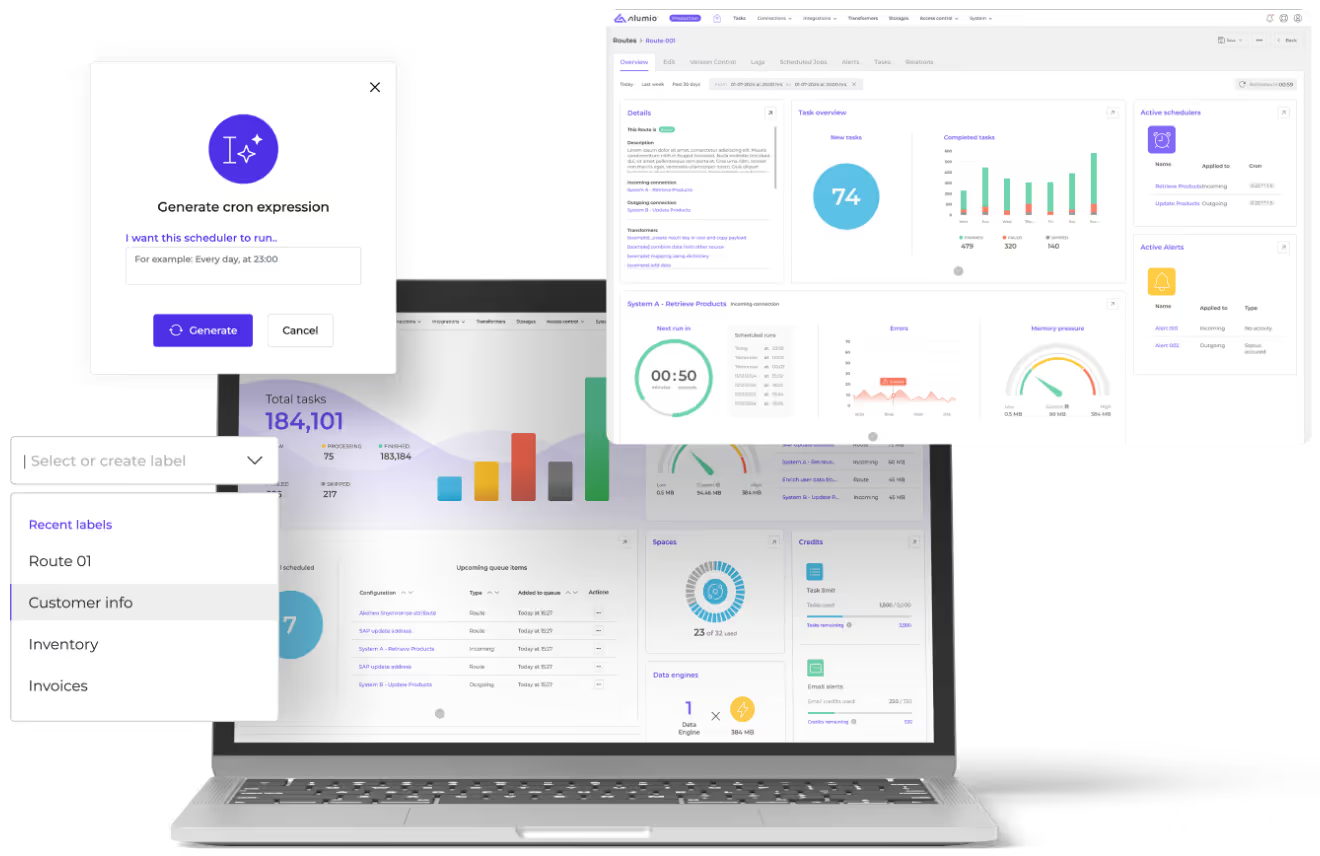
    Laptop screen displaying the Alumio iPaaS dashboard, alongside pop-up windows for generating cron expressions, selecting labels and route overview.