
A Alumio vivid purple arrow pointing to the right, a visual representation of how to access more page material when clicking on it.
Geh zurück
iPaaS
Externes Blog
Lesedauer: 5 Minuten

iPaaS-Plattformen und ISO 27001- und DSGVO-Konformität

von
Carla Hetherington
Veröffentlicht am
January 12, 2026
Aktualisiert am
January 15, 2026
IM GESPRÄCH MIT
Email icon
Email icon

Datenschutz ist jetzt eine Priorität der Vorstandsetage. Da die DSGVO und ISO 27001 die Art und Weise prägen, wie wir Daten erheben, speichern und teilen, können sich Unternehmen keine Schwachstellen in ihrem Tech-Stack leisten, insbesondere wenn es um Integrationen geht. Wenn Ihre Systeme mit benutzerdefinierten Skripten oder veralteter Middleware lose zusammengefügt sind, legen Sie möglicherweise vertrauliche Daten offen, ohne es zu merken. An dieser Stelle kommt eine iPaaS (Integrationsplattform als Service) ins Spiel. Nicht als Compliance-Tool an sich, sondern als wichtige Grundlage für sichere, überprüfbare und richtliniengesteuerte Integrationen. In diesem Blog untersuchen wir die Rolle von iPaaS-Plattformen, insbesondere Alumio, bei der Unterstützung von IT-Führungskräften und Compliance-Managern bei der Anpassung ihrer Systemarchitektur an die Anforderungen der DSGVO und ISO 27001.

Understanding the compliance landscape: ISO 27001 and GDPR

What is ISO 27001?

ISO 27001 is the global standard for Information Security Management Systems (ISMS). It provides a structured framework for managing data confidentiality, integrity, and availability. Key principles include:

  • Role-based access control
  • Risk assessment and mitigation
  • Continuous monitoring and auditing
  • Data encryption in transit and at rest

Learn more about ISO 27001 here →

What is GDPR?

The General Data Protection Regulation (GDPR) is an EU law that governs how organizations process personal data. Whether you're a SaaS startup or a global e-commerce platform, if you handle data from EU citizens, GDPR applies.

Its core principles include:

  • Consent and transparency
  • Data minimization and purpose limitation
  • Breach notification and right to erasure
  • Storage limitation and accountability

If your integrations handle customer data, think names, emails, payment details, those workflows are subject to GDPR. And if they aren’t secure, they’re a compliance risk.

Learn more about GDPR here →

Why integration poses compliance risks

Many compliance issues don’t stem from your core systems, but from what happens between them. In integration environments, risks often arise from unencrypted data transfers between apps or APIs, overly broad access rights to sensitive systems, and a lack of audit trails for changes or data flows. Businesses may also unknowingly route data through unapproved regions or vendors, or sync personal data without obtaining proper consent. These aren’t abstract threats; they’re everyday realities for companies connecting CRMs, ERPs, webshops, HR tools, and custom apps.

How iPaaS helps enforce compliance

An iPaaS isn’t a certification, but it’s a powerful compliance enabler. When set up properly, it becomes the connective tissue that keeps your data secure and your architecture auditable.

Encrypted data transfers

iPaaS platforms like Alumio encrypt data using TLS, HTTPS, and SFTP. This ensures that sensitive records aren’t exposed in transit; whether they’re moving between cloud apps or on-prem systems.

Role-based access control

Only the right people should have access to the right data. A secure iPaaS supports granular user roles and restricts access per flow, object, or field.

Audit logs and monitoring

Compliance isn’t just about prevention; it’s also about proof. iPaaS platforms maintain full logs of every event, API call, and transformation, making it easy to pass audits or investigate incidents.

Data minimization and field filtering

GDPR demands that you only collect and share what’s necessary. Alumio enables field-level filtering, so you can strip out unnecessary data before it moves.

API access control and rate limiting

Limit who can hit your APIs, how often, and with what data. These controls protect against brute-force attacks, misuse, and unintentional data leaks.

Consent-aware data flows

You can design integrations to check consent flags before syncing personal data; automatically skipping or deleting records where consent is missing.

Automated deletion flows

When someone invokes their “right to be forgotten,” your iPaaS can trigger workflows that scrub their data across every connected system.

Regional data routing

Need to keep data inside the EU? A compliant iPaaS lets you route and process data based on geography, supporting data residency and sovereignty needs.


Setzen Sie KI-Ambitionen in die Tat um

Portrait of Leonie Becher Merli, Business Development Manager at Alumio

Erhalten Sie eine kostenlose Bewertung Ihres Integrationsbedarfs

Portrait of Leonie Becher Merli, Business Development Manager at Alumio

Alumio’s built-in features for GDPR and ISO 27001 alignment

Alumio was designed from the ground up to support secure, enterprise-grade data integration.

Here’s how Alumio helps compliance teams and IT leaders meet ISO 27001 and GDPR requirements:

  • ISO 27001 certified hosting infrastructure
  • End-to-end encryption: HTTPS, TLS, and secure file protocols
  • Fine-grained user roles and access policies
  • Real-time logging and monitoring of all data flows
  • Consent-based integration logic: conditional syncs based on consent flags
  • EU-based hosting options for data localization
  • Field masking and filtering for personally identifiable information (PII)
  • Retention policies: automate data deletion or archiving based on rules

These aren’t just features; they’re foundational controls that turn Alumio into a GDPR-ready software architecture and a secure data integration platform for businesses under pressure to stay compliant.

Explore Alumio’s advanced security & compliance features →

What to look for in a compliant iPaaS

Looking for a GDPR or ISO 27001-ready iPaaS? Here’s your checklist:

  • Hosted on ISO 27001 certified infrastructure
  • Built-in support for consent-driven integrations
  • Field-level data filtering and masking
  • Region-based routing and EU data residency options
  • Role-based access control and user management
  • Transparent logs for audits and investigations
  • Workflow-based deletion and anonymization capabilities

If your current middleware or point-to-point scripts can’t check these boxes, it might be time to rethink your architecture.

Final thoughts: compliance starts between the systems

Security and privacy don’t stop at your CRM, your webshop, or your ERP; they extend to every connection between them. If your integration platform isn’t secure, your entire compliance posture is at risk.

Alumio gives you the foundation to scale your integrations with confidence. It keeps your data protected, your flows transparent, and your systems aligned with both GDPR and ISO 27001.

Ready to make your integration architecture secure, compliant, and future-proof? Book a demo or schedule a consultation with us.

Keine Artikel gefunden.
Blog-Themen:

FAQ

Integration Platform-ipaas-slider-right

Erhalten Sie eine kostenlose Bewertung Ihres Integrationsbedarfs

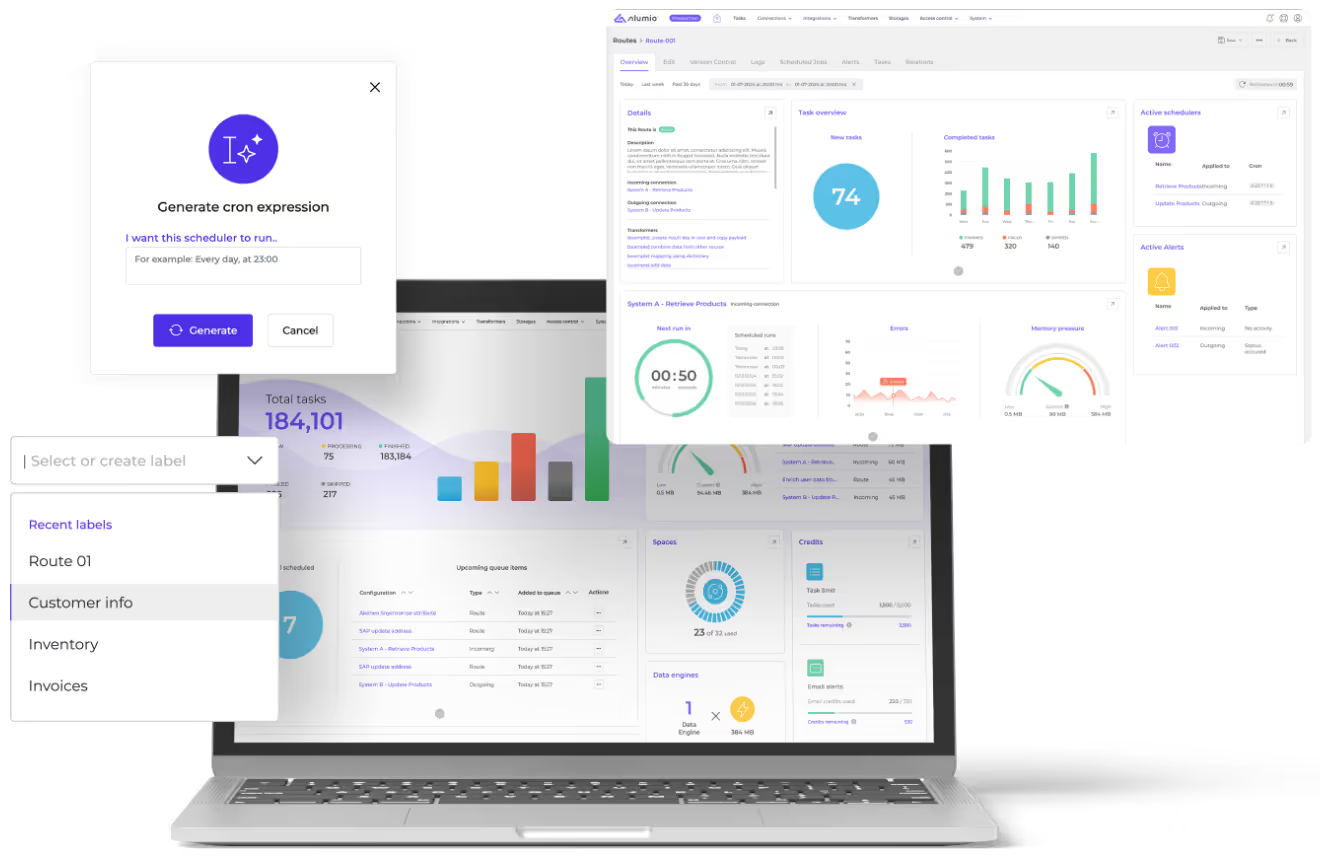
Laptop screen displaying the Alumio iPaaS dashboard, alongside pop-up windows for generating cron expressions, selecting labels and route overview.