Discover the 4 different types of integration platforms
A system integration platform serves as a central hub for modern businesses to connect all their disparate applications and data sources, helping build holistic data ecosystems. While the integration platform initially started off as on-premises middleware solutions, the advent of cloud applications and SaaS (Software as Service) solutions have caused it to evolve into the cloud integration platform or SaaS integration platform. From helping orchestrate e-commerce integrations to connecting manufacturing, banking, hospitality businesses and more, nearly all industries today are benefiting from implementing an integration platform.
What is an integration platform?
An integration platform is an on-premises or cloud-based middleware solution that helps connect two or multiple applications, services, or data sources. They are designed to facilitate flexible data exchange, streamline processes, and ensure data security. There are several kinds of integration platforms that are tailored to meet specific business requirements and technological landscapes.
Between traditional on-premises middleware solutions like the ESB (Enterprise Service Bus) system integration platform to the current demand for API-driven cloud integration platforms, there are many kinds of integration platforms that specifically cater to a variety of use cases such as the workflow automation platform, data integration platform, hybrid integration platform, and the iPaaS (integration Platform as a Service). Let’s explore all these integration solutions!
1. The ESB integration platform: Connecting legacy systems
The Enterprise Service Bus or ESB integration platform acts as a middleware layer, facilitating communication between different services and applications. It simplifies and standardizes the integration of legacy systems with various applications, services, and databases. Traditionally, an on-premises integration platform, ESB systems require the installation of hardware and rely heavily on-premises footprints and older messaging & document standards, making them ideal for older enterprise solutions.
Read more about the ESB vs iPaaS: On-Premises vs. Cloud-Based Middleware.
2. The workflow automation platform: Driving cloud-based process automation
Workflow automation platforms like Zapier or Make, based around the SaaS integration platform model, specialize in connecting cloud-based tools, applications, and other SaaS solutions to enable process automation. Designed to optimize business processes, reduce manual intervention, and enhance overall productivity, workflow automation platforms help orchestrate workflows to automate entire business processes between connected applications. This can include data validation, approvals, data transfers, or any other task within the defined workflow. As such, this type of integration platform helps accelerate routine tasks, reduce manual efforts, and minimize errors. Most importantly, it helps trigger automation based on events that could be a specific date, a new data entry, or an external event, such as receiving an email.
Read a comparison of Zapier’s workflow automation platform vs the Alumio iPaaS →
3. Data Integration Platforms: Enabling seamless data orchestration
A data integration platform can be an on-premises system, a cloud integration platform, or a hybrid solution that helps harmonize data from various systems, databases, and applications, presenting a unified and cohesive view. It operates through a series of processes that encompass data “Extraction, Transformation, and Loading (ETL),” ensuring that data is not only exchanged seamlessly but also transformed and enriched to meet the specific requirements of the organization. Most importantly, a data integration platform offers essential data governance tools and advanced data security and privacy compliance features. These platforms play a pivotal role in helping enterprises enable data synchronization, foster data accuracy, and enhance decision-making capabilities.
Read a comparison of Informatica’s data integration platform vs the Alumio iPaaS →
4. The iPaaS (integration Platform as a Service: Leveraging API-led connectivity
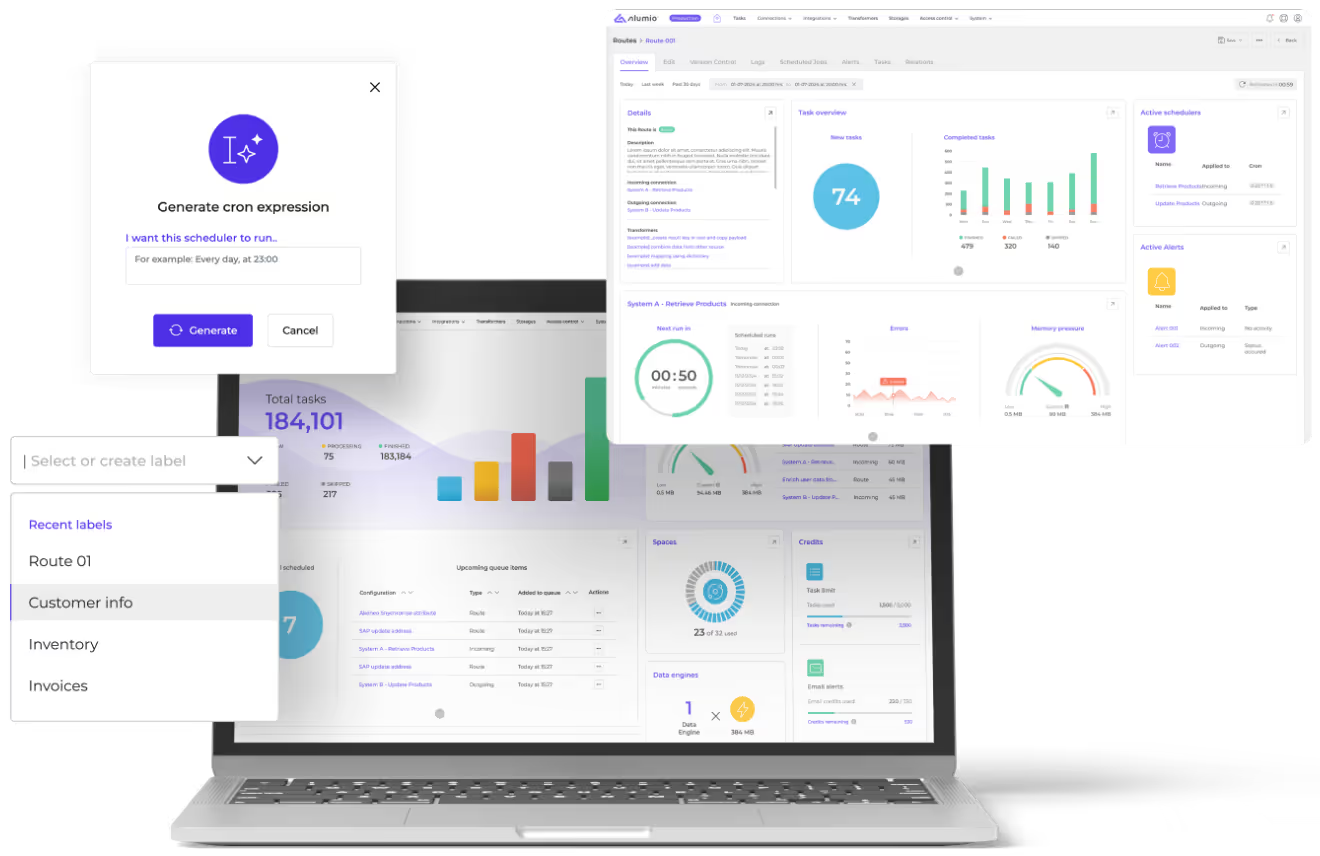
Amidst the evolving landscape of integration solutions, the iPaaS (Integration Platform as a Service) emerges as a next-gen cloud integration platform. As an API-led integration platform, it provides a user-friendly low-code or no-code web interface to develop, govern, and orchestrate integrations between two or multiple SaaS, cloud apps, on-premises systems, or data sources.
Advanced iPaaS solutions like Alumio also provide advanced mappers and transformers to customize integrations limitlessly and enable workflow automation between all integrated systems. Enabling real-time data exchange, iPaaS solutions also enable synchronization and event-driven automation, streamlining operations, eliminating data solutions, and ensuring data accuracy. To add to this, iPaaS solutions provide connectors, which are essentially pre-configured software data that facilitate faster integrations between SaaS and applications. At the same time, the iPaaS can also provide strict data governance tools that a data integration platform provides, ensuring stringent data security and privacy compliance.
In other words, holistic iPaaS solutions like Alumio combine API-driven integration, data integration, SaaS integration, and even workflow automation within one cloud integration platform. As such, the iPaaS acts as a unifying force, allowing organizations to transcend traditional integration barriers and embrace the scalability, flexibility, and efficiency inherent in cloud-based solutions.
…66% of companies will invest in integration platforms to address data integration and automation challenges; another 27% already have…”
- market study by IDG
Which integration platform should businesses choose?
Choosing the right integration platform is pivotal for businesses aiming to optimize their operations in alignment with specific needs and technological landscapes.
For enterprises with legacy systems seeking streamlined communication, the ESB integration platform serves as an ideal bridge, facilitating integration with various applications and services. At the same time, workflow automation platforms prove invaluable for businesses focused on cloud-based process automation, reducing manual efforts and enhancing overall productivity. Data Integration Platforms are specifically for enterprises dealing with large volumes of data exchange, requiring seamless orchestration of diverse data sources. On the other hand, the iPaaS emerges as a contemporary choice for organizations looking for a balanced solution to comprehensively integrate applications, automate processes, and unify data from one scalable cloud integration platform.
Ultimately, how businesses choose between the aforementioned integration platforms: ESB, workflow automation, data Integration platform, or the iPaaS, hinges on organizational goals, existing infrastructure, and the desired level of connectivity, offering tailored solutions for enterprises across various industries and technological spectrums.





.svg)








.svg)
.svg)
.svg)
.svg)
.svg)
.svg)